

Treasury officials have told a Senate estimates committee they may need to allocate more money to cover borrowers using the federal government’s expanded 5 per cent deposit scheme who default on their loans due to interest rate rises.
Treasury, which set aside $35.7 million in contingent liabilities for defaults on the scheme in December’s mini budget, said on Thursday it is revising the sum following the RBA decision to increase interest rates for the first time in two years last week.
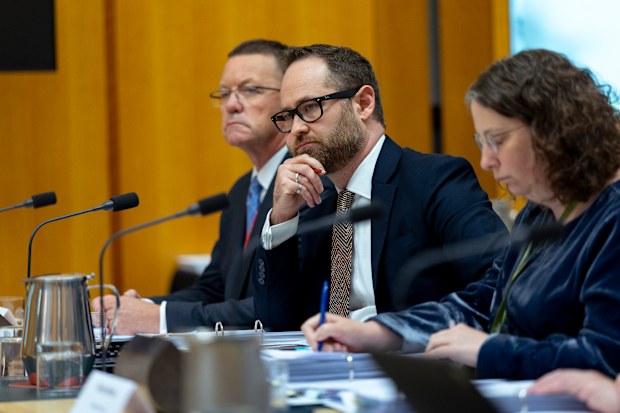
“We have considered the impact of the rate rises on the repayments of participants in the 5 per cent deposit scheme and we will consider the impact on contingent liabilities and publish that outcome in the budget context,” Treasury first assistant secretary Dr Nerida Hunter said.
Borrowing costs rose last week when the Reserve Bank lifted the cash rate to 3.85 per cent, raising the stakes for borrowers taking advantage of the federal scheme that allows them to take out a loan with a 5 per cent deposit, rather than the 20 per cent lenders typically demand.
While federal government guarantees the 15 per cent portion of the deposit a borrower doesn’t have, letting them avoid the extra cost of lenders mortgage insurance for low-deposit customers, they still have to borrow the outstanding 95 per cent to buy their home.
Advertisement
In October, the Labor federal government raised the price threshold of homes bought under the scheme from the levels by the former Coalition government in 2021, allowing people to borrow more. This increased the risk of higher rates, mortgage broker Brett Sutton said.
“It’s just so much more money,” said Sutton, a broker at Sydney-based Two Red Shoes. “The greater the debt, the bigger the impact of the rate rise. They’re able to go into larger debt with a smaller deposit.”
In Sydney, the price threshold rose to $1.5 million from $900,000. It lifted to $1 million in Brisbane and Canberra and to $950,000 in Melbourne. Adelaide’s price cap rose to $900,000, Perth’s to $850,000 and Hobart’s to $700,000.
The federal government also abolished a cap on the number of buyers able to use the scheme, making it unlimited.
Banks assess mortgage applicants’ ability to repay loans with an additional 3 percentage point buffer, so the effect of one or two 25-basis-point increases on borrowers will be minimal.
Default rates of borrowers under the scheme are lower than for the market as a whole.
Housing Australia official Emma Jarman said, in response to a question from One Nation senator Malcolm Roberts, that at end-December, almost three-quarters (73 per cent) of loans under the scheme were ahead on repayments, 26 per cent were on schedule and that 0.3 per cent were in 90-day-plus arrears. About 1000 borrowers, or 0.8 per cent, were on hardship plans, Jarman said.
Australia’s largest mortgage lender, CBA, this week said that 0.63 per cent of its home loan book was in 90-plus-days arrears at end-December, double the proportion of the government scheme.
On Thursday, ANZ said 90-days-plus arrears accounted for about 0.75 per cent of its home loans.
Labor senator Tim Ayres, appearing with Treasury and Housing Australia officials in the Economics Legislation Committee hearing, said the responsibility shown by borrowers in the scheme created little concern around the contingent liability.
“So it’s an unquantified liability, but … it’s a very, very, very, almost infinitesimally small rate of having to pay it out,” he said.
Separately, Housing Australia chief executive Scott Langford disclosed the results of an employee survey the board discussed this week that showed 50 per cent of staff felt engaged, while 25 per cent were neutral and 25 per cent expressed dissatisfaction with the organisation.
“We understand it’s been a very challenging operating environment,” Langford said.
“There is a very contested policy space that there is frequent public commentary that many of our staff have taken very personally, because they are putting in enormous efforts.”
The survey had a “very high” response rate of 86 per cent, he said.
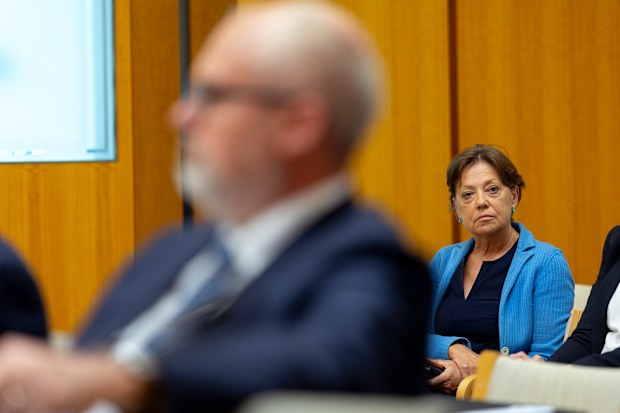
Liberal senator Andrew Bragg clashed with Housing Australia board member – and former ASIC commissioner – Cathie Armour over the lack of independence of a key board subcommittee called out in an independent Deloitte report.
“I don’t think that there’d be many occasions when a member of the board who’s not a member of the Audit and Risk Committee will just turn up to
a meeting,” Bragg said.
“Well, I think you’re completely wrong, Senator, it’s absolutely standard in listed companies in Australia for other members of the board who are not a member of a committee to attend,” Armour replied.